The product
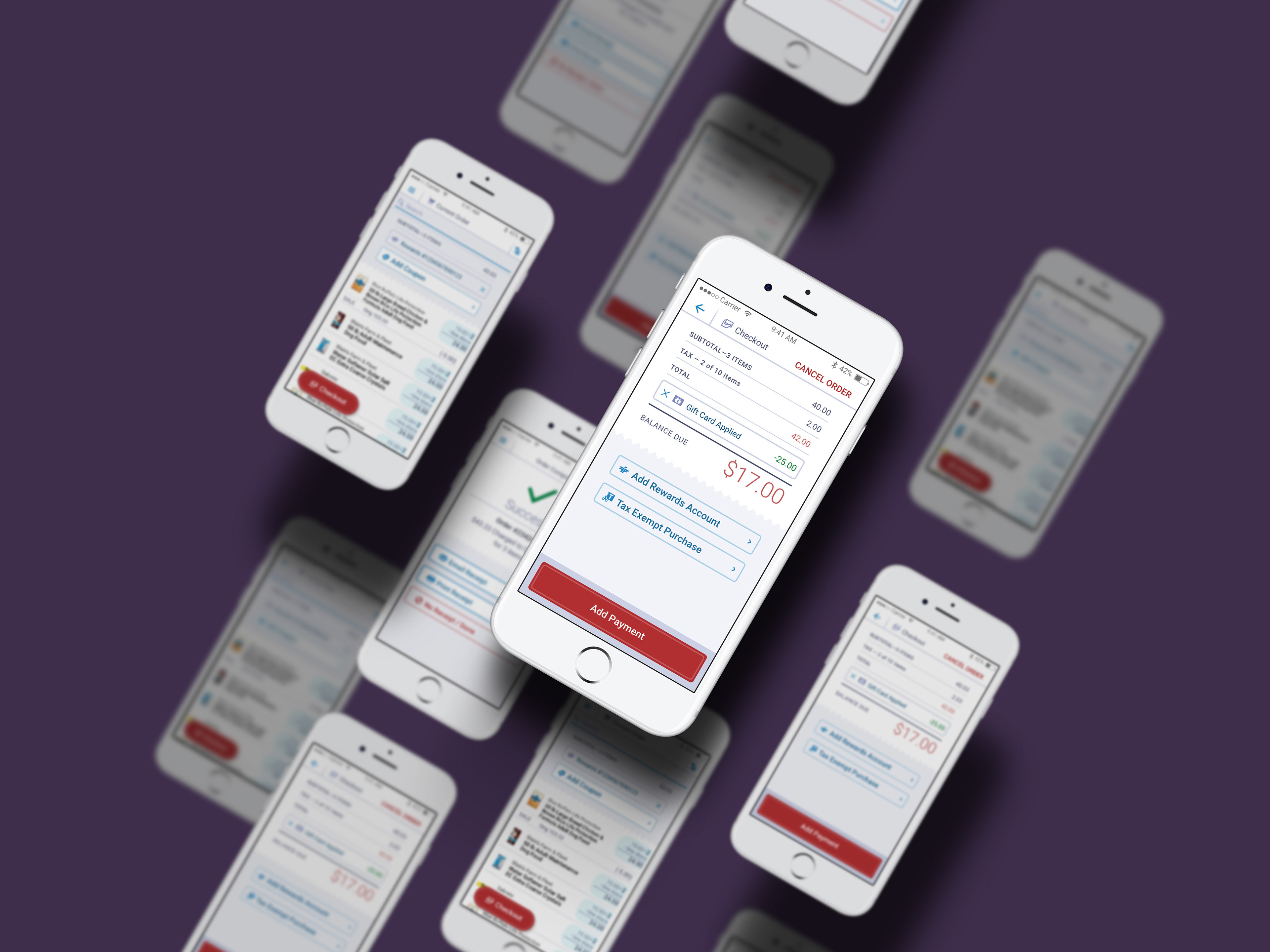
Parsable is a suite of productivity, procedure, and communication apps targeted at enterprise level manufacturing organizations. Parsable products include a web-based admin experience for team management, technical implementations, job planning, and procedure authoring; as well as a connected worker application, on web and mobile, for executing the jobs and procedures.
The Project
As part of routine customer discovery conversations and new user research studies, the Parsable product team identified a need that, if addressed, could empower our end users, help their organizations avoid potential waste or accidents. This feature would allow the procedure authors to activate a new feature on inputs that would allow the end user in the connected worker app to see previous values for inputs, inline and in-context while executing a procedure.
My roles
—Product management for early discovery.
—User research lead.
—Designer leadership for early design work.
—Final design owner of mobile and web execution experiences.
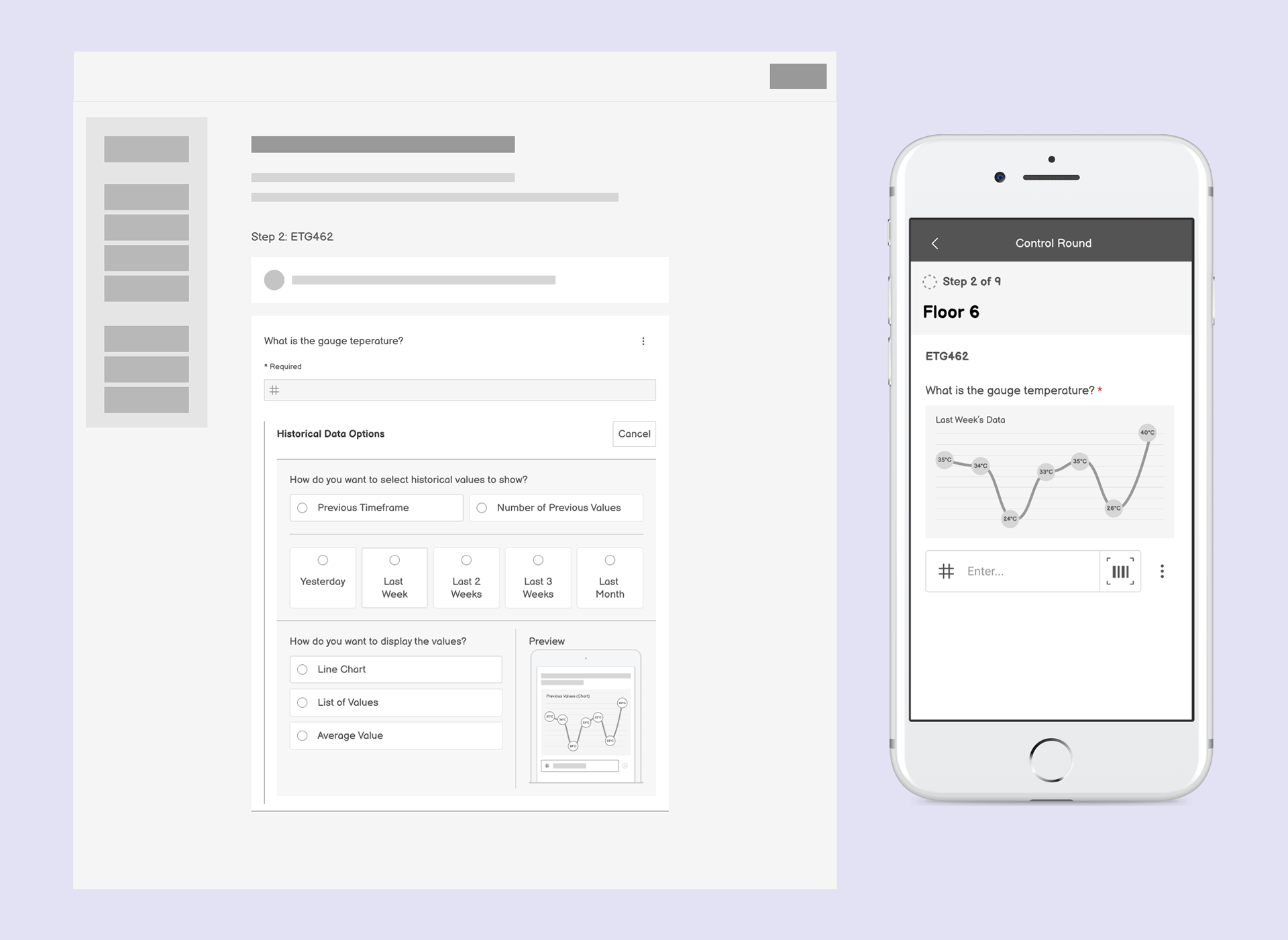
Early wireframes for customer discovery.
Serving as the initial discovery designer and product manager for the feature, I lead early customer conversations and created some wireframes to support those discussions. After initial discovery, the project was deprioritized for other projects. When it was picked back up, I had implemented a new user research program that we leveraged to gain end user perspective as well as the customers insights.
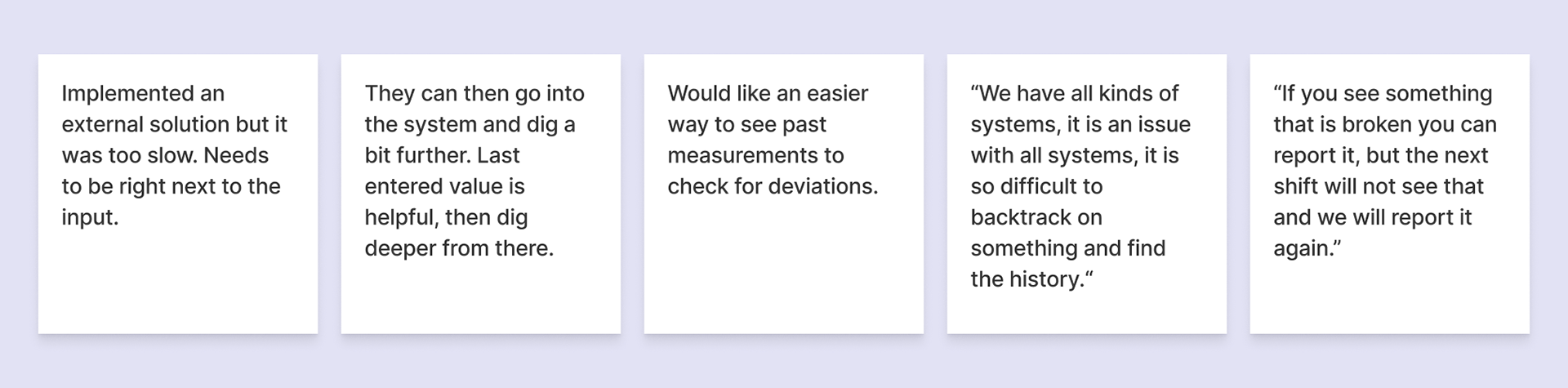
Insights/quotes from the qualitative user research.
During early design, we discovered that even a single previous value offered the end users valuable information, but five would give them true insights. We moved forward with this early target and the designer resolved to display the five values in an accordion style component. As I led the qualitative user research study, I collaborated with the two designers and the product manager that took over executing the initial interface designs. With shifting team priorities, I eventually took over design for the end user experiences on mobile and the web execution app.
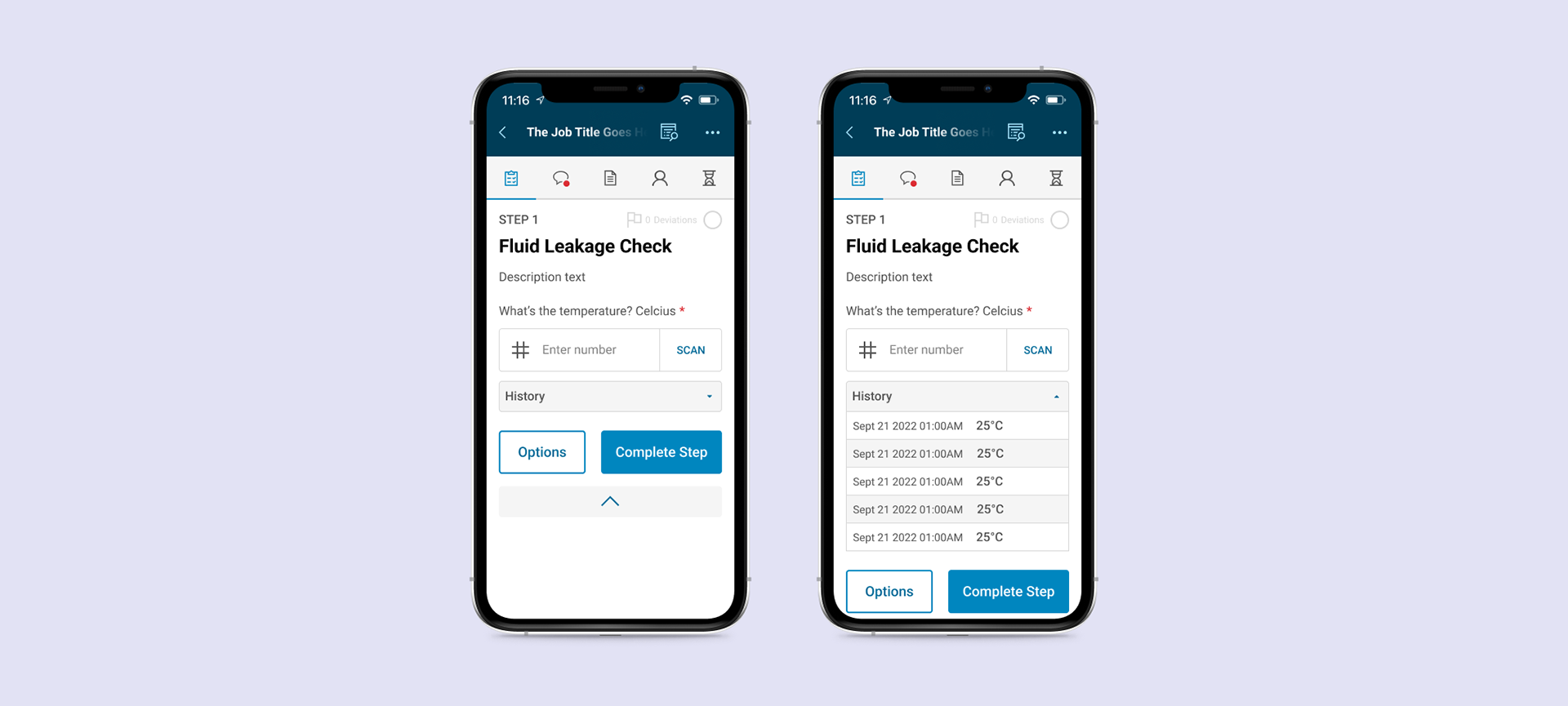
First MVP that delivered 5 previous values in an accordion.
As the project progressed, and the initial feedback from customers came in, we realized that users from many customers needed more data to derive real insight. The design team explored options to display additional values, settling on showing up to five in an accordion with a scrollable overlay for viewing more.
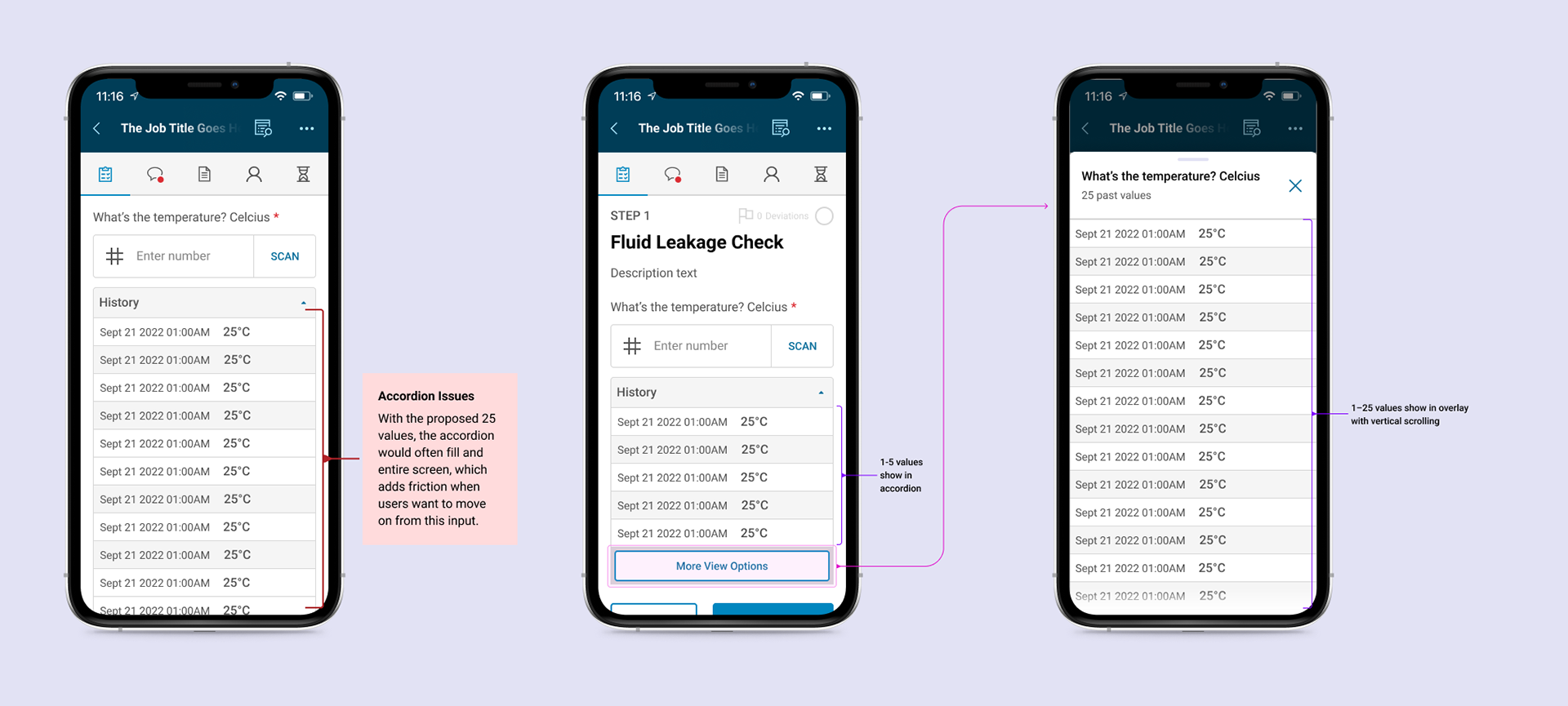
Second version with 1-25 previous values.
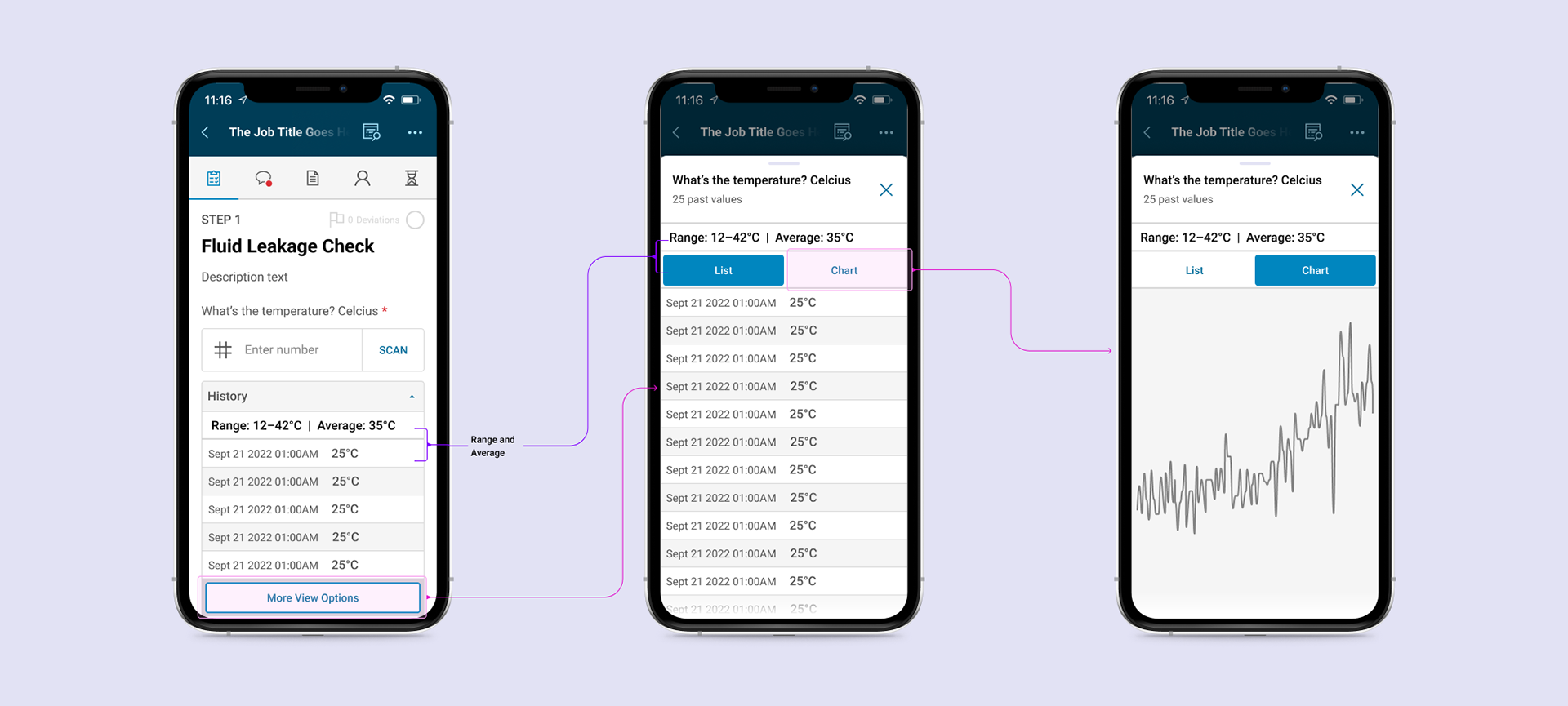
Third version with range and averages for previous values, and chart view mode.
What shipped and what I learned
Input history of 1–25 values became the second shippable iteration. Customer and user feedback was positive—and pointed toward the next opportunity we'd already been discussing: surfacing instant insights from the data, not just the raw values.
The through-line across both iterations is the same: the right number of values isn't an arbitrary design decision—it's a research finding. One previous value tells you what happened last time. Five tells you whether last time was normal. Twenty-five tells you whether there's a pattern worth acting on.